Health & Fitness
Five Simple Movements for a More Comfortable Travel Season
By Dr. Jae Oh, Chiropractic Physician
Travel season brings exciting destinations, family gatherings, and well-earned breaks from our routines. It also brings long flights, road trips, and train rides that can leave us feeling stiff before the vacation even begins.
In my practice, I frequently hear patients describe neck tension, tight hips, and lower back discomfort after traveling. Often, the challenge isn’t sitting itself; it’s spending hours in nearly the same position. Our bodies benefit from variety, and a few minutes of movement can make a difference.
Here are five practical exercises you can try along the way. Keep each movement gentle and within a comfortable range.
“Often, the challenge isn’t sitting itself; it’s spending hours in nearly the same position.”
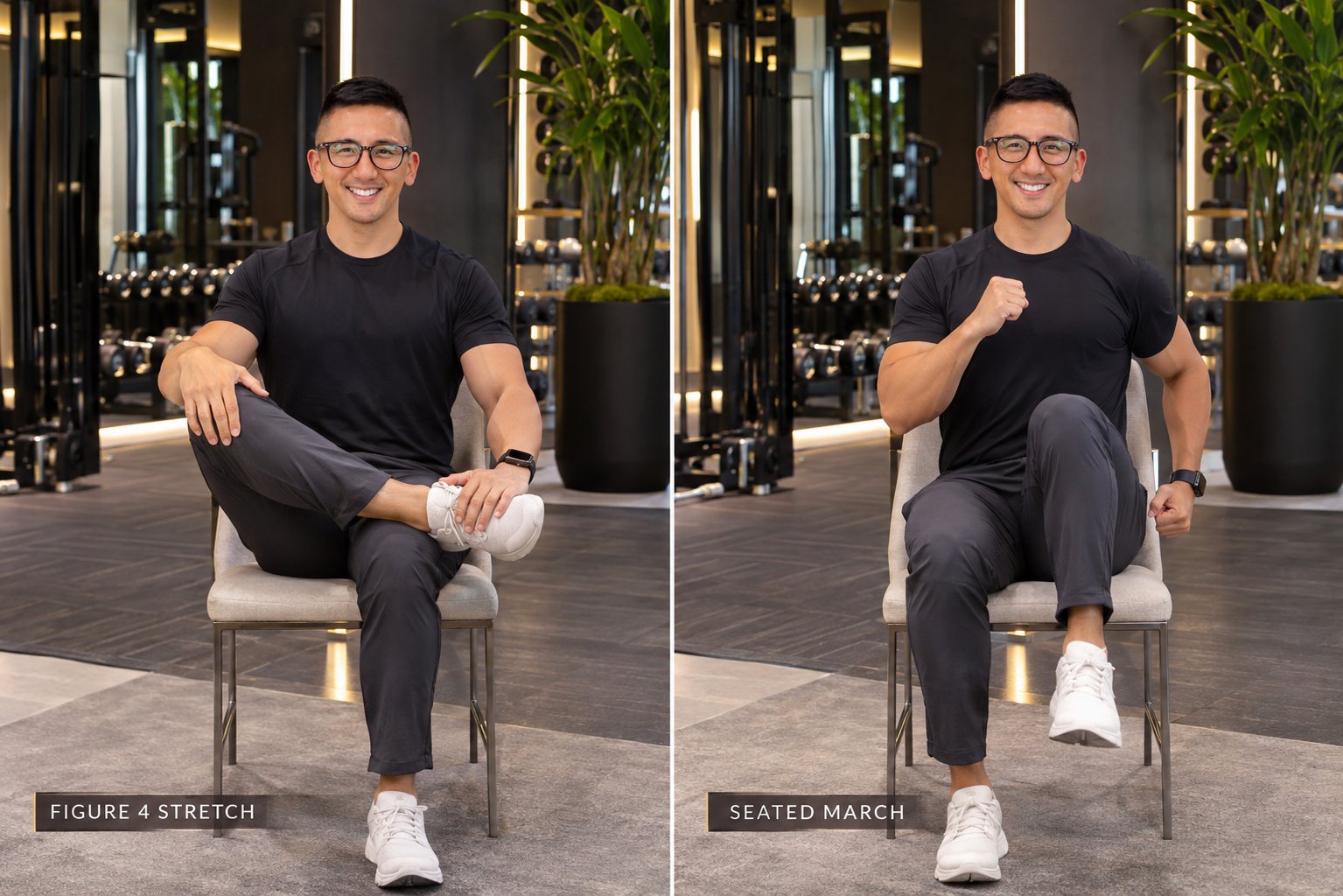
1. Seated Marching: My Favorite Travel Exercise
If I could recommend just one simple movement during prolonged travel, seated marching would be one of my favorites. It’s easy, requires very little space, and activates muscles that often remain relatively inactive while sitting.
Prolonged sitting can leave your hip flexors feeling stiff and your lower back uncomfortable.
How to perform: Sit upright with both feet flat on the floor. Slowly lift one knee toward your chest, then lower it with control. Alternate legs in a marching motion while keeping your spine upright.
Perform 15–20 repetitions on each side.
This movement activates your hip flexors and may help reduce stiffness associated with prolonged sitting. It’s especially convenient during flights, train rides, or even while waiting at the airport.
My travel tip: Try seated marching every 30 minutes or less when safely seated with sufficient legroom.
2. Chin Tucks: Give Your Neck a Break
Between checking smartphones, reading, and resting against airplane seats, our necks often remain in awkward positions while traveling.
How to perform: Sit upright and look straight ahead. Gently draw your chin backward, as though creating a small double chin, without tilting your head up or down.
Hold for three to five seconds and repeat 10 times.
This exercise encourages controlled cervical movement and activates muscles that help support your neck. It’s an excellent movement break after extended screen time.
3. Seated Figure-Four Stretch: Release Tight Hips
Your hips play an important role in supporting comfortable movement through your pelvis and lower back. Prolonged sitting can leave the gluteal muscles and deep hip rotators feeling particularly tight.
How to perform: While seated, place one ankle over your opposite knee, forming a figure-four position. Keeping your spine relatively straight, gently lean forward until you feel a comfortable stretch through your buttock and outer hip.
Hold for 20–30 seconds before switching sides.
Avoid forcing the stretch, especially if you experience hip or knee discomfort.
4. Seated Spinal Rotation: Restore Mobility to Your Back
Remaining seated for extended periods can leave your mid-back and lower back feeling stiff.
How to perform: Sit upright with both feet flat on the floor. Slowly rotate your upper body toward one side, using your chair or armrest for gentle support.
Hold for 10–15 seconds, then repeat on the opposite side. Perform three repetitions per side.
The goal isn’t to force a deep stretch, but to introduce comfortable, controlled movement through your spine.
5. Calf Raises: Activate Your “Second Heart”
Your calf muscles are sometimes called your body’s “second heart.” As they contract, they help move blood from the legs back toward the heart through the calf muscle pump.
A 2026 systematic review and meta-analysis in Frontiers in Physiology reported that ankle-pumping exercises can increase blood-flow velocity in the lower limbs. The research supports a simple takeaway: moving your ankles and calves matters, especially when you’re sitting for long periods. It does not establish that these exercises prevent blood clots.
When it’s safe to stand, hold a stable surface, rise onto your toes, and slowly lower your heels. Repeat 15–20 times. If you’re seated, alternate lifting your heels and toes instead. This seated ankle-pumping variation more closely resembles the movements studied in the review.
The Habit That Matters Most
No single stretch replaces regular movement. When practical, stand or walk every one to two hours, take safe breaks on road trips, and shift positions throughout your journey. On flights, move around only when permitted. If you have a history of blood clots or other medical concerns, ask your clinician about travel precautions.
I remind patients that caring for their bodies doesn’t begin or end in the treatment room. Small, consistent choices add up. This travel season, give yourself a few moments to move so you can spend more time enjoying where you’re going.
Travel well, move often, and arrive ready for what matters most.
Windermere Chiropractic
Jae Oh, DC
1805 Maguire Rd., Ste. 135, Windermere
407-217-6969 | windermerechiropractic.com